PAC TRAINING BELIEVES the future of shooting sports begins with supporting our youth shooters
WHY? BECAUSE IT IS A SPORT THAT IS INCLUSIVE. COMPETITIVE. MADE FOR YOUTH.
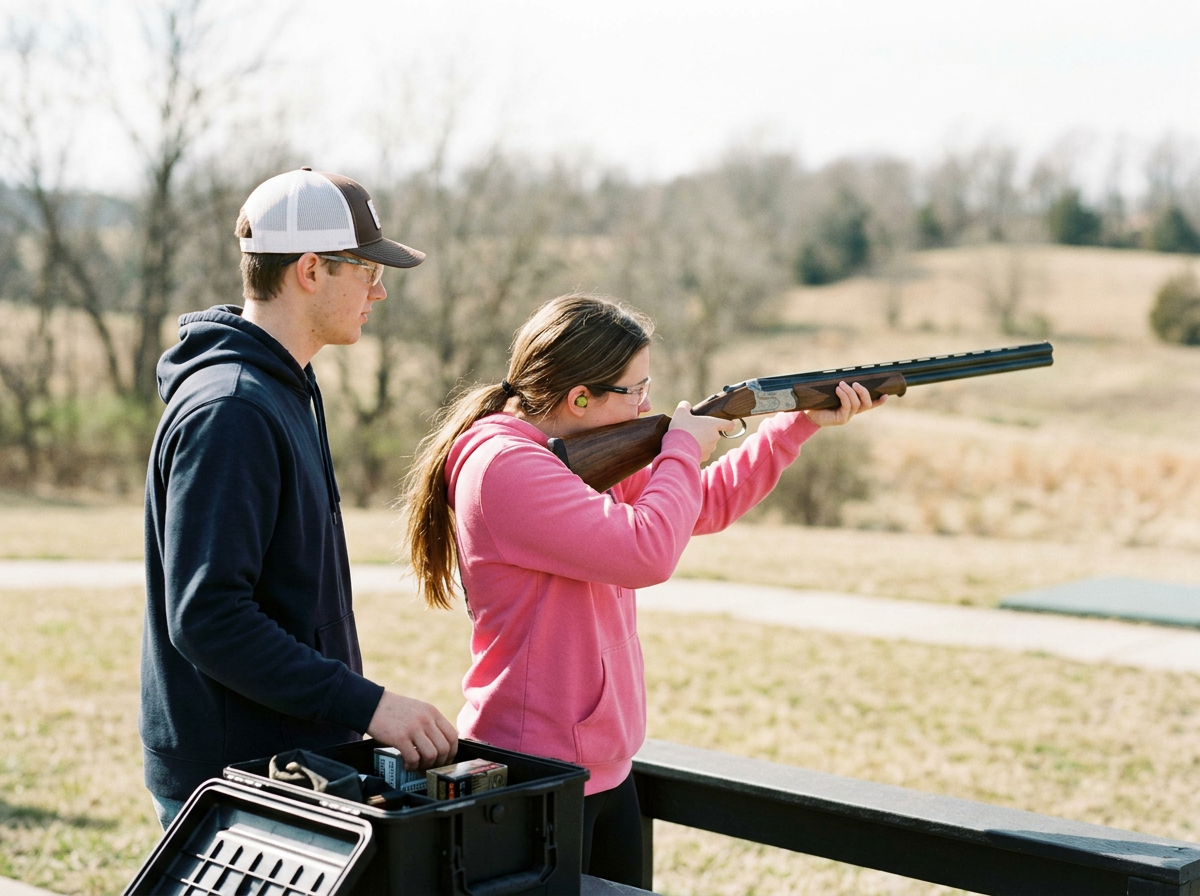
Youth shooting sports are among the most inclusive competitive sports available to young athletes. Boys and girls compete together on the same teams, physical size and speed are far less important than in traditional team sports, and programs such as the USA Clay Target League specifically accommodate athletes with physical disabilities. New York's 4-H Shooting Sports program reports particularly strong participation from girls and young women, including athletes who have gone on to national competition and college scholarships.
how can PAC TRAINING help youth shooters get started?
INFORMATION, COACHING, CONSULTING
LET US BE YOUR RESOURCE!
-
NYS 4-H Shooting Sports / Cornell Cooperative Extension — One of the best low-cost ways to get started. NYS 4-H offers air rifle, rifle, shotgun, pistol, archery and other disciplines, with certified instructors and structured safety training. Families should contact their county CCE/4-H office to find the nearest program. Erie County 4-H also offers financial assistance scholarships, including funds that can be used for shooting-sports training.
Local rod & gun clubs with youth programs or reduced-cost opportunities — Clubs can be considerably less expensive than paying for individual range time and private instruction. For example, Newark Rod & Gun Club has a Terry & Beth Johnson Youth Shooting Fund that helps subsidize youth shooting costs, including NYS Clay Target League participation. Rochester Rifle Club Inc is another local organization with a long-running junior program and competition pathway.
MidwayUSA Foundation — This is worth asking a local youth shooting team about. The Foundation provides grants to youth shooting teams rather than individual athletes, helping with expenses such as ammunition, targets, travel, equipment and other team costs. As of June 30, 2026, it reported $11.8 million in cash grants distributed during 2026 and 2,619 teams eligible to receive grants.
Western New York youth-sports grant/equipment programs — Organizations such as Project Play WNY and its partners help youth-serving organizations reduce participation barriers. Its Good Sports partnership provides new sports equipment to qualifying youth organizations in the nine-county WNY region, while Project Play's grant programs can help organizations provide programming at little or no cost to families. These generally aren't individual-shooter grants, so the key is to find a local club/team that participates.
Ask the club/team about “sponsored” equipment, ammunition, and entry fees before buying anything — This can be the biggest money saver. A beginning youth shooter often doesn't need to own a firearm immediately. Some programs provide or loan equipment, and NYS 4-H specifically notes that equipment is provided for its instructor-training workshops. Start with a program that provides supervised instruction and equipment, let the child determine whether they enjoy the sport, and then consider purchasing equipment later.
-
1. Start with the county 4-H offices
Wayne County: Cornell Cooperative Extension of Wayne County — 315-331-8415. Wayne 4-H is currently enrolling for the 2025–26 program year. I'd call and specifically ask, “Do you currently have an active 4-H Shooting Sports club, or can you connect me with a certified shooting-sports volunteer?”
Monroe County: Cornell Cooperative Extension of Monroe County — 585-753-2550 / monroe4h@cornell.edu. Monroe 4-H previously advertised a shooting-sports club for ages 9–18 at Rochester Rifle Club using club-owned air rifles and certified instructors, so this is a particularly good place to ask about the current status or next enrollment.
Ontario County: Cornell Cooperative Extension of Ontario County — 585-394-3977. This is probably the most promising first call in Ontario County: CCE's 2024 report specifically says three volunteers revived the county's 4-H Shooting Sports program, offering disciplines including air rifle/rifle, shotgun, pistol, archery and others.
2. Check the NYS High School Clay Target League
If the student is in grades 6–12, go to the New York State High School Clay Target League's team directory and search by school. The current directory includes area schools such as Newark, Palmyra-Macedon, Marcus Whitman, Naples and others.
The League is especially attractive for a beginner because students don't have to try out if the team has room, and teams can include students from different schools in the same or adjacent districts. The current participation fee is $40 per sport, although ammunition, targets, range and other team costs can vary. Search the NYS Clay Target League teams
3. Call Newark Rod & Gun Club
Newark Rod & Gun Club in Wayne County is worth contacting directly. It has a Terry & Beth Johnson Youth Shooting Fund, established specifically to help subsidize youth shooting costs, including participation in the NYS Clay Target League and traveling leagues.
That's exactly the kind of organization I'd ask:
“We're looking to get our child started in youth shooting. Do you currently have a youth team or know which local team you would recommend for a beginner?”
4. Look at Ontario Rod & Gun Club
Ontario Rod & Gun Club is another particularly relevant option. The club says it hosts the NYS High School Clay Target League and has a youth program, along with trap and other shooting activities.
This could be especially convenient for families in Ontario, Wayne, eastern Monroe and surrounding communities.
5. Ask the closest club to connect you to the team, not just sell you range time
A few other places I'd call include:
Walworth Sportsman's Club — particularly interesting because it identifies itself as the home of the East Palmyra Christian High School Trap Team.
Victor Rod & Gun Club — active in trap/skeet leagues and youth-oriented shooting activities.
Hol Field Rod & Gun Club in Bloomfield — trap/skeet and instruction.
Canandaigua Sportsman Club Inc — a family-oriented club in Ontario County with extensive shotgun facilities.
North Seneca Sportsmen & Rifle in Phelps — another option for families in the eastern Ontario County area.
-
With knowledge of local resources and connections to most local area gun clubs we can be a great place to start.
Former youth coaches and willing to start a new scholastic trap team - if no teams have openings this is an opportunity we can discuss.
If you would like to start a team at your local school we can help father and present information that can be shared at school board meetings, etc.
-
Yes, we are willing and able to do private coaching individually or with small groups.
-
Our operations manager has two children who play Division I athletics with full scholarships and has expertise in communicating with college coaches, understanding rules and regulations around recruiting for college sports, and how to identify private scholarships and funding opportunities for those college programs that can’t offer full or even partial scholarships but provide excellent opportunity for advancement.
-
Our operations manager has two college aged children and has worked and volunteered around youth athletes and programs for more than 20 years.
Our owner and lead instructor has worked with scholastic teams and individual youth shooters for more than 15 years.
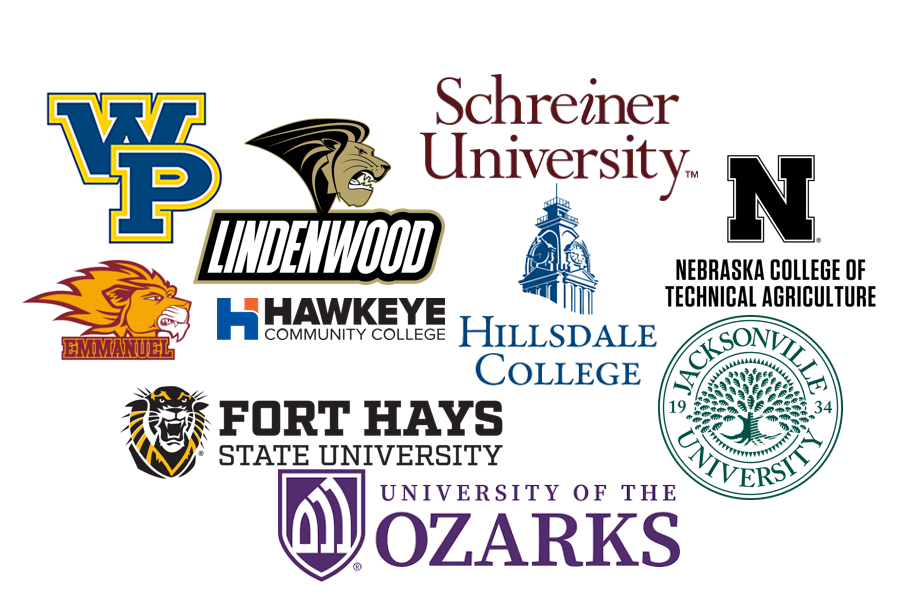
There are over 300 colleges and universities in the US offering collegiate shooting programs and a portion of those offer athletic or shooting-related scholarships!
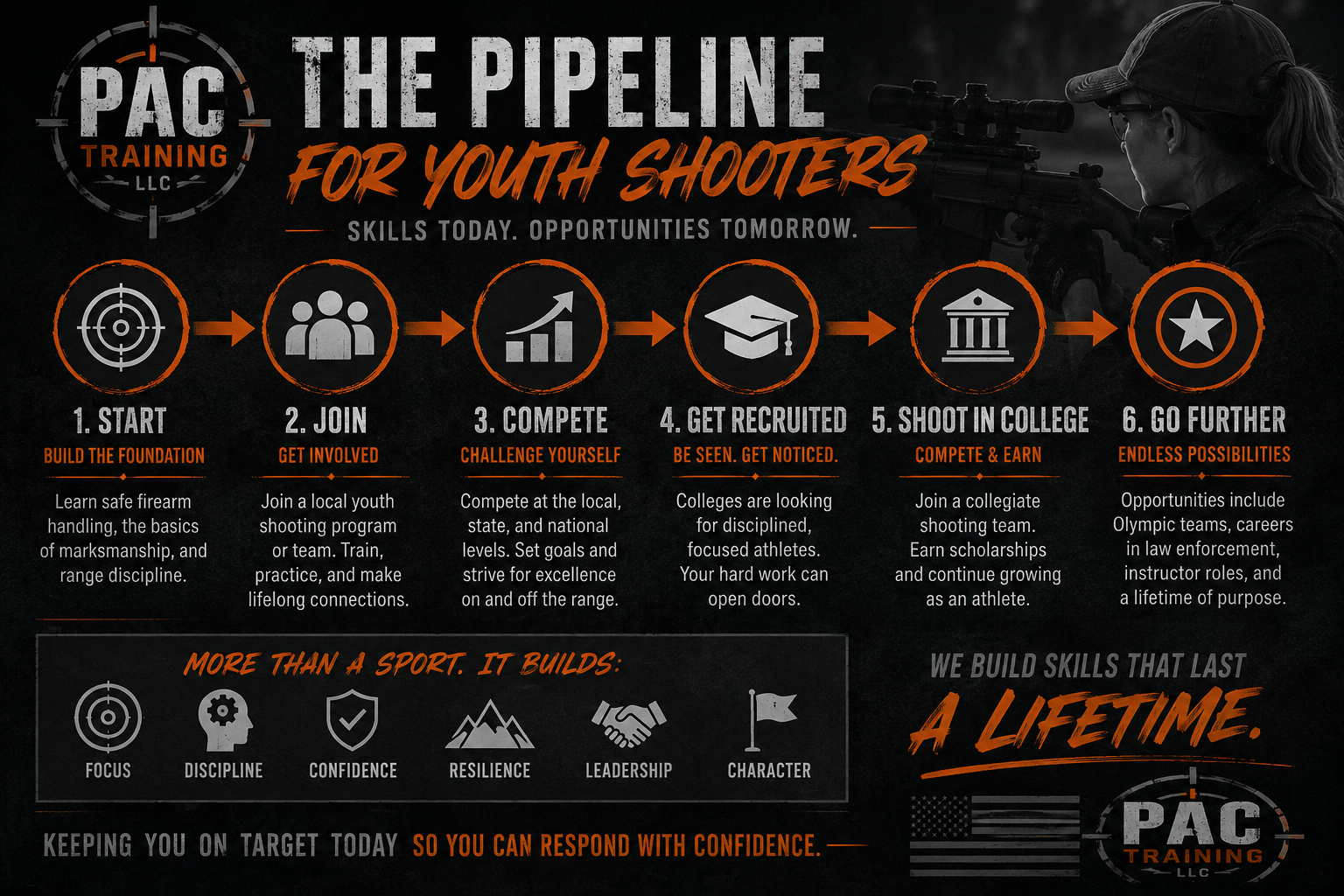
There is an already well-established pipeline for youth shooters.
What are some colleges with programs?
Fun FACTs About CHoosing a shooting sport over something like football, lacrosse, basketball, etc
Lowest reported injury rates:
Injury rate per 1,000 athlete exposures:
🏈 Football — 3.96
🏀 Boys' basketball — 1.54
⚾ Boys' baseball — 0.89
🎯 Shooting — no directly comparable national youth rate available; published research describes injury incidence as “too low to report”
Most “traditional” youth sports have an average retention rate of less than 4 years
95%+ annual retention among non-senior USA Clay Target League athletes
Is THIS just a NICHE or DYING SPORT?
NO.
USA Clay Target League — 2025
More than 55,000 participants in 2025 according to the League.
More than 2,000 high schools and colleges are expected to participate in 2026.
The League says 13,200 students were new participants in 2025.
Since 2020, more than 83,000 high-school and college students have taken their first steps into clay target shooting through the League.
The organization describes 2025 as its 31st consecutive record-breaking season.
There is also a very interesting historical figure: the League's 2025 reporting says participation for the 2024–25 school year exceeded 53,000, including more than 38,000 students in the spring high-school season
Scholastic Clay Target Program — 2024/25
A 2026 Iowa DNR shooting-sports presentation reports the SCTP had:
19,076 athletes
1,690 active teams
5,352 coaches
That's just SCTP—not all youth shooting sports in the country.
And the 2026 national championship season gives us another good measure of scale: the SCTP national event had nearly 2,900 athletes and more than 13,500 event entries over its 12-day schedule.
This doesn’t include shooters that are just doing 4-H or individual state programs!
What actually gets a young shooter recruited?
This is probably the most important practical question.
A college coach is generally looking for some combination of:
1. Competitive results
Examples: State championships, Regional Championships, National Championships, Junior Olympic results, SCTP/USA shooting results, High-level invitational results.
2. Consistent scores
One great tournament is less useful than a shooter who can repeatedly perform at a high level.
3. Discipline specialization
For rifle: Air rifle, Smallbore
For shotgun: Trap, Skeet, Sporting clays
4. Academic performance
This can dramatically increase the total financial package.
Ole Miss's 2025 example is telling: twelve rifle athletes achieved Scholastic All-American status, requiring a 3.20+ GPA.
5. Coachability
A coach isn't simply buying a score. They're recruiting a person who will: attend practice, follow training plans, represent the school, maintain academic standards, function within a team, handle pressure
6. Competition experience
A shooter with several years of structured competition has something a casual recreational shooter doesn't: a measurable performance history.